In this Issue
Professional learning becomes most powerful when it reflects the practices we want to see in classrooms and schools. As we enter the final weeks of this school year, it is a moment to look ahead and plan together for success in the next year. In this issue, we highlight how CLEE builds educator capacity through collaborative inquiry, structured dialogue and shared reflection. Rather than offering isolated strategies, we design learning experiences where educators engage in the same protocols and facilitation practices they can use to strengthen instruction, team collaboration and student support systems. Across this work, educators move from discussion to deeper understanding by analyzing authentic dilemmas and examining student work together, strengthening their ability to think collectively and improve practice in ways that carry forward into the year ahead.
Learning in Action
- Spotlight: Building Capacity Through Engagement
- Programs: Reconnecting to Learning from Student Work at Fall Meeting
- Building Capacity for Collaborative Leadership Through Connected Learning Pathways
Reminders
- Introduction to Continuous Improvement
- Programs for Individuals Calendar

Each month, CLEE offers a question or two to help you reflect on your growth. Join CLEE on social media to share your answer.
What becomes possible when we examine practice and student work together?

Building Capacity Through Engagement
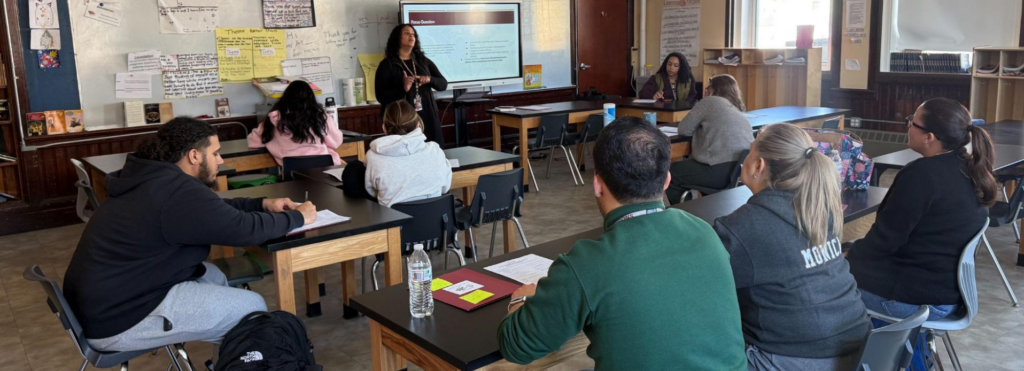
We believe professional development should do more than just offer advice and suggestions. It should build educators’ capacity to think collaboratively, reflect deeply and apply high-quality instructional practices in ways that meet the needs of their students and teams. We engage educators in the same kinds of practices we encourage them to use in classrooms, faculty meetings and student support structures.
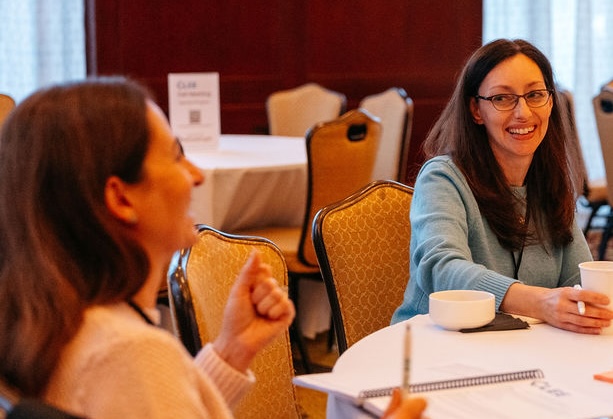
One recent example comes from the Each One, Teach One Professional Learning Conference run by the Segue Institute for Learning. Aspiring principals in CLEE’s Principal Residency Network (PRN) facilitated a Community of Practice session at the conference for more than 100 educators. Rather than approaching challenges through isolated problem-solving, staff engaged in structured dialogue protocols including the Consultancy and What? So What? Now What? to examine authentic dilemmas connected to instruction, student culture and systems.
The session modeled what effective engagement can look like in practice. Educators worked collaboratively to analyze problems from multiple perspectives, reflect on root causes and identify actionable next steps. The protocols created space for participants to connect their own experiences to the dilemmas being discussed while strengthening collective ownership of solutions.
Reflections reinforced the impact of the experience:
- “Meaningful discussion that made me reflect on my practice, and hearing suggestions from more experienced teachers was really helpful.”
- “I had connections with the dilemma the presenter was sharing! It also gave me ideas to also use in my classroom.
- “It was reaffirming to hear the dilemma and relate to the root causes within my own work.”
- “I loved hearing multiple perspectives on the same dilemma!”
This approach reflects a key differentiator of CLEE’s work. We do not simply provide suggestions. We help educators build their own capacity to address challenges by facilitating collaborative learning experiences that strengthen instructional practice, improve faculty and student support meetings and create sustainable structures for continuous improvement. By modeling high-quality curriculum and facilitation practices throughout our programs, educators leave with strategies they can immediately apply in their own settings.
Continue the Learning
Whether you are looking to strengthen your own facilitation skills or build collaborative structures across your organization, CLEE offers multiple ways to continue your learning journey:
- Programs for Individuals – leadership and facilitation programs designed to build practical capacity
- CLEE Communities of Practice – focused on implementation and scaling
- Introduction to Continuous Improvement – flexible online course that helps educators lead structured cycles of improvement in their settings

Reconnecting to Learning from Student Work at Fall Meeting
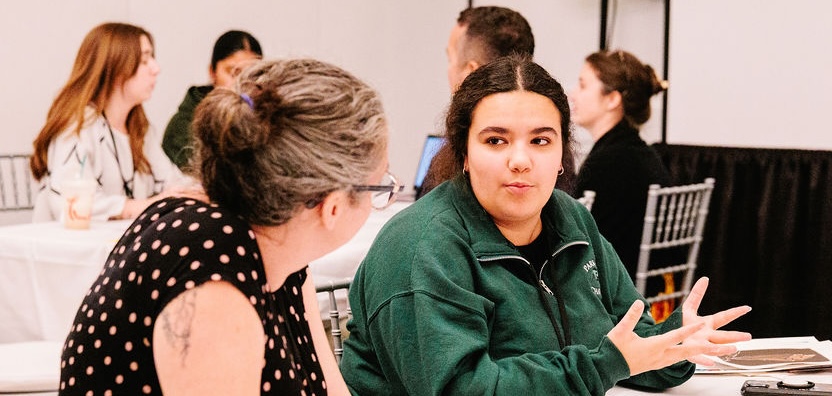
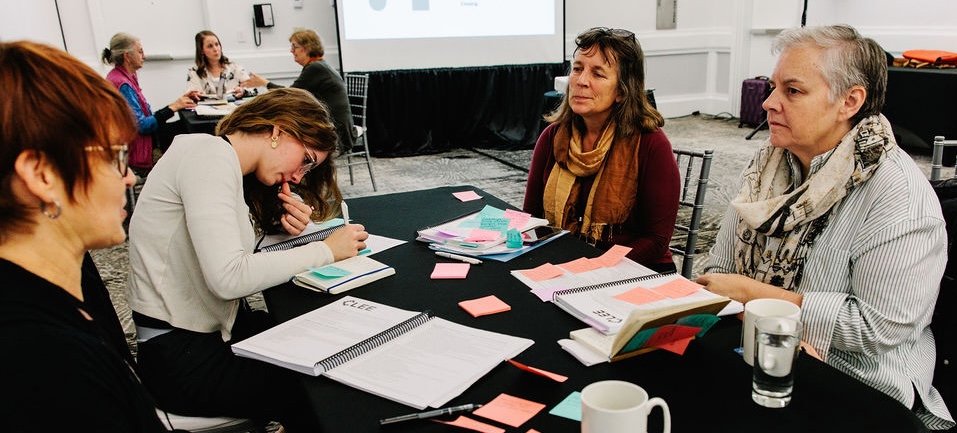
Learning from Student Work remains one of the most powerful practices for understanding student engagement and strengthening instruction. Student work provides more than evidence of completion or performance. It offers insight into how students make meaning, where curriculum implementation succeeds and where instructional improvement may be needed. Student artifacts help educators move beyond assumptions and ground improvement in what students actually produce, as classroom data.
Many educators engaging in collaborative learning spaces spend significant time discussing dilemmas and problem-solving. Those conversations matter, but learning from student work together can provide more proximity and context for school improvement rather than only examining an educator’s dilemma. This year’s Fall Meeting will intentionally reconnect participants to that core practice by strengthening the habit of closely examining student work together as a source of inquiry, reflection and instructional learning.
CLEE is excited to continue the long history of this work through the School Reform Initiative, the Looking at Student Work Collaborative and Harvard: Project Zero. That lineage established student work as serious intellectual and instructional inquiry. It positioned student artifacts as windows into thinking, not just products to evaluate. It also reinforced the importance of collaborative protocols, an inquiry stance and sustained dialogue as conditions for instructional improvement.
We will reconnect with the habit and practice of learning from student work at Fall Meeting this year. Participants will share student work in special workshops for structured collaborative dialogue. Some will bring work they wonder about. Others will bring assignments or units they want to revise because student outcomes did not align with expectations. Others will frame dilemmas rooted in their own practice. Across these entry points, student work remains the central text for learning and improvement.
Join educators and leaders in Massachusetts on October 8-9, 2026 for the CLEE Fall Meeting. Participants will reconnect to Learning from Student Work as a core practice together while examining the relationship among teacher moves, student engagement and curriculum implementation.

Building Capacity for Collaborative Leadership Through Connected Learning Pathways
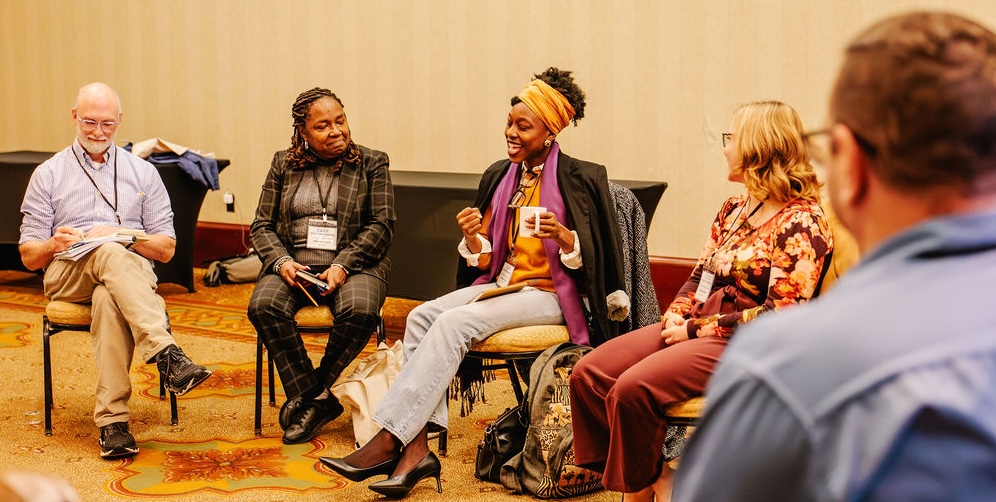
Across schools and systems, leaders are seeking ways to turn collaboration into sustained improvement for students. CLEE offers a connected set of experiences that builds facilitative leadership through practice, reflection, and real work with colleagues. The Part-Time Facilitator Pathway, Facilitator Training, and Collaborative Leadership Package provide aligned entry points for educators who want to lead adult learning with clarity and purpose.
The CLEE Part-Time Facilitator Pathway supports educators who want to deepen facilitation practice while staying in their current role. Participants learn through apprenticeship, coaching, and real facilitation opportunities. They strengthen skills through observation and feedback, develop competencies aligned to CLEE facilitative leadership practices, and join a national community of practice. The pathway includes early learning and investment, followed by access to paid facilitation opportunities and certification that supports professional growth and credibility.
Facilitator Training offers a focused starting point for building core skills in leading adult collaboration. This virtual experience helps participants structure meaningful dialogue, use protocols effectively, and create conditions where participant voice shapes learning. The training strengthens facilitation skills often associated with roles such as PLC coach, reflective learning community facilitator, or facilitative leader, with tools that transfer directly into practice.
The Collaborative Leadership Package brings together three of CLEE’s most powerful learning experiences: Fall Meeting, Facilitator Training, and the CLEE Community of Practice. This bundled offering connects learning in-person at our annual national meeting with virtual skill building and ongoing community support across the year. It provides a structured way to grow as a collaborative leader while learning alongside peers from across the country, and a discount of over $500 off the individual registrations.
Together, these experiences offer a coherent pathway from building foundational facilitation skills to engaging in sustained collaborative leadership practice.
Introduction to Continuous Improvement is a flexible, online learning course designed to build capacity in the frameworks, tools, and mindsets required to lead cycles of improvement in your setting.
Through seven course modules, participants learn how structured dialogue and guided inquiry create conditions for identifying and testing student-focused improvements. Each module offers practical strategies that can be applied immediately in professional learning settings to support instructional improvement and learner success.
Programs for Individuals Calendar
CLEE offers learning opportunities that fit your time, budget and goals. We are currently offering programs designed to support educators at any stage of their journey. All sessions are open to any educator. Engage in one or more programs to build your capacity to collaborate to improve student outcomes.
| Session | Outcome | Time Commitment | Cost | Dates |
|---|---|---|---|---|
| CLEE Fall Meeting | In-depth feedback and practice facilitating collaborative tools | Two full in-person days | $740 | October 8–9, 2026 |
| Facilitator Training (Virtual) | Develop deep facilitation skills to lead adult learning | Eight 3-hour virtual sessions | $1,200 |
Fall cohort
8/6, 8/12, 8/18, 8/27, 9/23, 10/29, 11/12/2026; 1/28/2027 Spring cohort 2/2, 2/25, 3/4, 3/25, 4/6, 4/29, 5/13, 5/27/2027 |
| CLEE Community of Practice | Feedback from peers and practice with collaborative tools in topic-focused sessions | Four 2-hour virtual sessions | $250 |
Implementing High-Quality Curriculum
8/19, 9/24, 10/29, 11/12/2026 Scaling What Works 1/28, 2/25, 3/25, 4/29/2027 |
| Facilitating Virtual Protocols | Deepen practice and confidence in leading virtual learning communities | Four 90-minute virtual sessions | $250 | 8/6, 8/13, 8/20, 8/27/2026 |
| Intro to Adult Facilitation | Flexible online learning in frameworks, tools, and mindsets for adult learning communities | 7 modules over 1 month | $175 |
Summer cohort
July 27 – Aug 28, 2026 Fall cohort Nov 2 – Dec 18, 2026 |
| Intro to Continuous Improvement | Flexible online learning in frameworks, tools, and mindsets for identifying and testing student-focused improvements | 7 modules over 6 weeks | $175 |
Summer cohort
July 27 – Sep 18, 2026 |
| Virtual Workshop Series | Short practical experience with a collaborative tool | 90-minute topic-based virtual sessions | Free |
Analyzing Student Work to Drive Improvement
Sep 24, 2026 Giving & Receiving Feedback in a Learning Community Oct 22, 2026 |
| Collaborative Leadership Package | Bundle Fall Meeting, Facilitator Training, and Community of Practice | listed above | $1800 (save over $500) | You choose your cohorts |