
In schools and learning communities, “voice” is often invited, but not always meaningfully integrated. At CLEE, we believe that making the voices of students, families, and educators matter is not about collecting opinions; it is about creating the conditions where diverse perspectives actively shape understanding, decisions, and next steps. The following five practices reflect how CLEE supports leaders and educators to move from surface-level participation to authentic collective sense-making.
1. Design for Voice, Not Just Presence
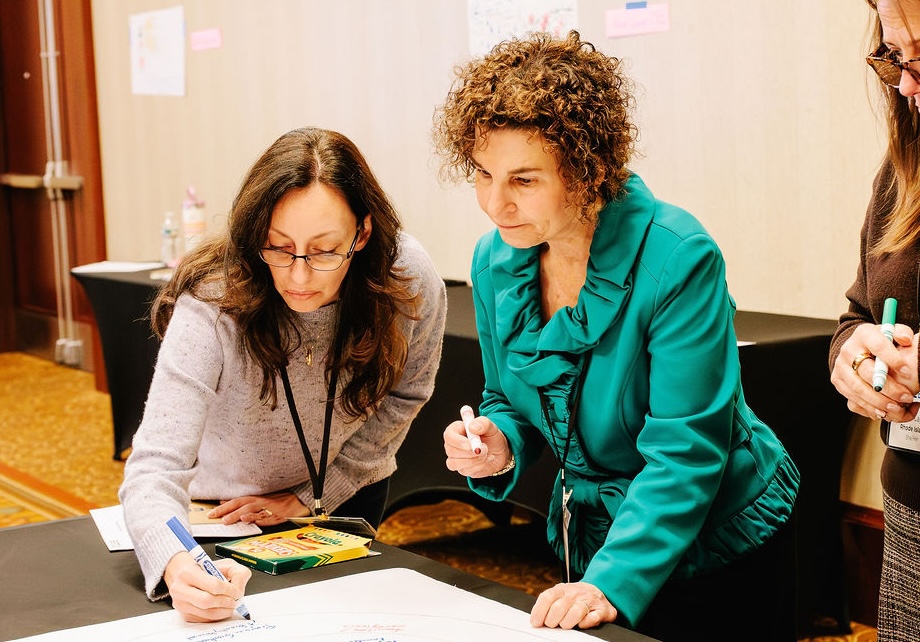
Stakeholder voice does not emerge by chance. It must be intentionally designed for. This means using structures that slow thinking, surface multiple perspectives, and create equitable access to participation. Protocols, purposeful prompts, and intentional sequencing help ensure that all participants, especially those who may be hesitant, have meaningful opportunities to contribute. Designing for voice shifts the focus from “who speaks most” to “what thinking is surfaced.”
2. Build Shared Understanding Before Seeking Agreement
Too often, teams rush to solutions before fully understanding the current reality. Making voices matter requires prioritizing shared understanding over consensus. We have found the best ways to do this are practices that allow participants to examine data, experiences, and assumptions together before moving to action. When individuals feel their perspectives have been heard and understood, teams are better positioned to hold productive tension and make more thoughtful decisions.
3. Normalize Productive Discomfort and Vulnerability
Authentic voice involves vulnerability. Leaders and facilitators play a critical role in recognizing that discomfort is part of meaningful learning and change. It is key to normalize risk-taking, acknowledge power dynamics, and create agreements that support each person sharing their own truth, even when it is difficult. Safety does not mean avoiding tension; it means ensuring that divergent perspectives are met with curiosity rather than defensiveness.
4. Use Data as a Mirror, Not a Cudgel
Data can amplify voice or silence it. We encourage data to be used as a mirror to reflect and observe patterns, experiences, and outcomes, particularly student experiences, rather than as a tool for judgment. When data is paired with structured dialogue it invites participants’ to connect quantitative trends with lived experiences. This integration allows voices to contextualize the data and ensures that decisions are informed by both evidence and human impact.
5. Translate Voice into Visible Action
Voice matters most when it leads to action. Leaders must close the loop by making explicit how input informs next steps. When participants see their contributions reflected in decisions, priorities, and follow-through, trust deepens and engagement grows.
Making voices matter is ultimately about both facilitative practices and leadership. It requires intentional design, humility, and a willingness to listen deeply. When leaders commit to these practices, they create learning communities where voice is not only heard, but valued, integrated, and acted upon. Engaging stakeholder voice becomes an ongoing practice embedded in the culture and not a one-off event.
Leverage Stakeholder Voice for School Improvement with PLANS
PLANS is a grant-funded opportunity for schools and districts in Connecticut, Massachusetts, and Rhode Island to enact student-focused improvements with support. The program helps leaders leverage stakeholder voice to build shared understanding and widespread commitment to implement school improvement goals and strategies.
I had a great experience at the session. I originally went into it not knowing at all what to expect. When it was explained what we were doing and why, I understood how much of an impact this could potentially have. Putting students, teachers, administrators and parents in one room, reviewing statistics and brainstorming potential solutions. It not only allows us to hear each other’s perspectives without interfering with lessons or coming from a place of controversy, it allows us to see that for the most part, we all have the same values and ideas at heart.
-Parent in current PLANS cohort