
Learning pathways are more than a structure. They are a way to design professional learning to honor how adults grow. This approach creates intentional entry points that allow educators to engage where they are and provides clear, supported paths toward deeper expertise.
Coherence makes this approach transformative. Rather than experiencing professional development as isolated events, participants move through a connected system of learning. I experienced the power of such pathways at CLEE. My own journey began with free virtual workshops, then deepened my thinking in asynchronous courses, built connections at the Fall Meeting, and extended the impact of my learning through Facilitator Training. Each layer built on the next, creating a scaffolded experience where learning was revisited, refined and applied over time.
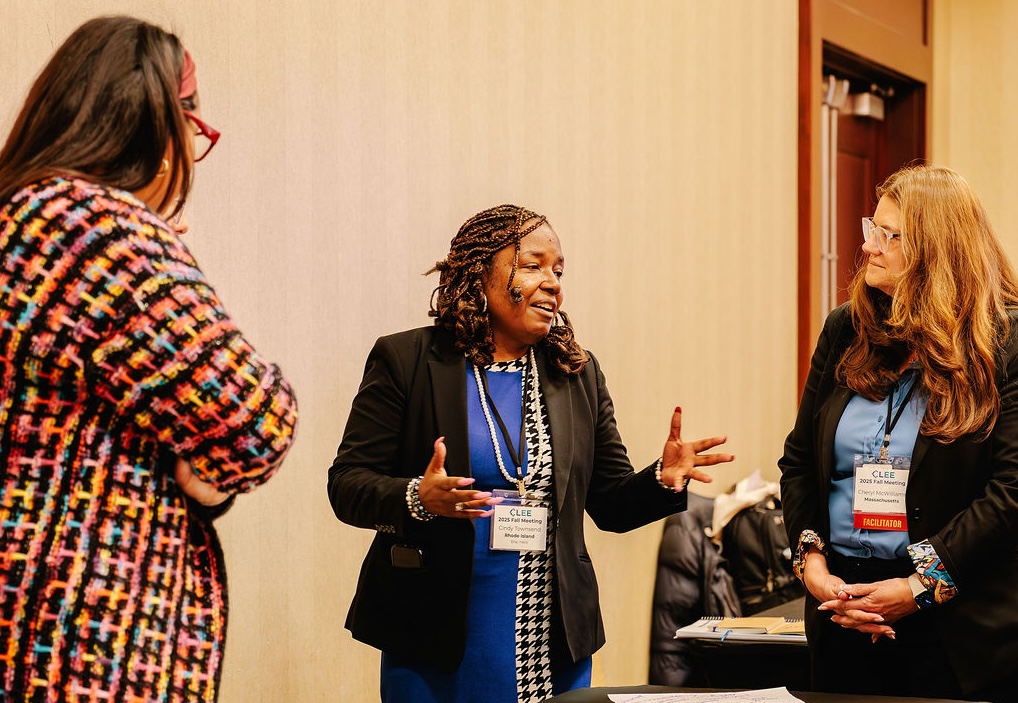
CLEE’s Fall Meeting brought this vision to life for me. Participants were not expected to arrive as experts. Instead, they were invited to explore, reflect and grow within a supportive and collaborative environment. The flexibility of multiple entry points ensured that both new and experienced practitioners could engage meaningfully, while feedback and practice turned theory into actionable skill.
After Fall Meeting, I took the opportunity to go deeper in Facilitator Training. This experience builds on earlier learning by focusing on how to guide adult collaboration with purpose and skill. We practice using protocols, facilitating feedback and creating conditions that elevate voice and strengthen collective thinking. We focus on application and refine our practice as we step into the role of facilitative leader.
Crucially, we are not doing this work alone. I have worked alongside brilliant colleagues at Fall Meeting and Facilitator Training who have joined me in dialogue, collaboration and shared problem-solving. Together, we strengthen our individual capacity and collective impact.

The result is not just learning, it is agency. Educators take ownership of their development, test and refine their practice and lead for students. Facilitator Training, in particular, extends this impact by preparing participants to lead others and multiply the reach of high-quality professional learning throughout their organizations.
What begins as participation evolves into leadership.
Supported learning pathways transform professional development into a coherent, evolving system where educators can enter at any point, deepen their practice over time and engage in a continuous cycle of application, feedback and impact.
Find your pathway in an upcoming workshop or training.